


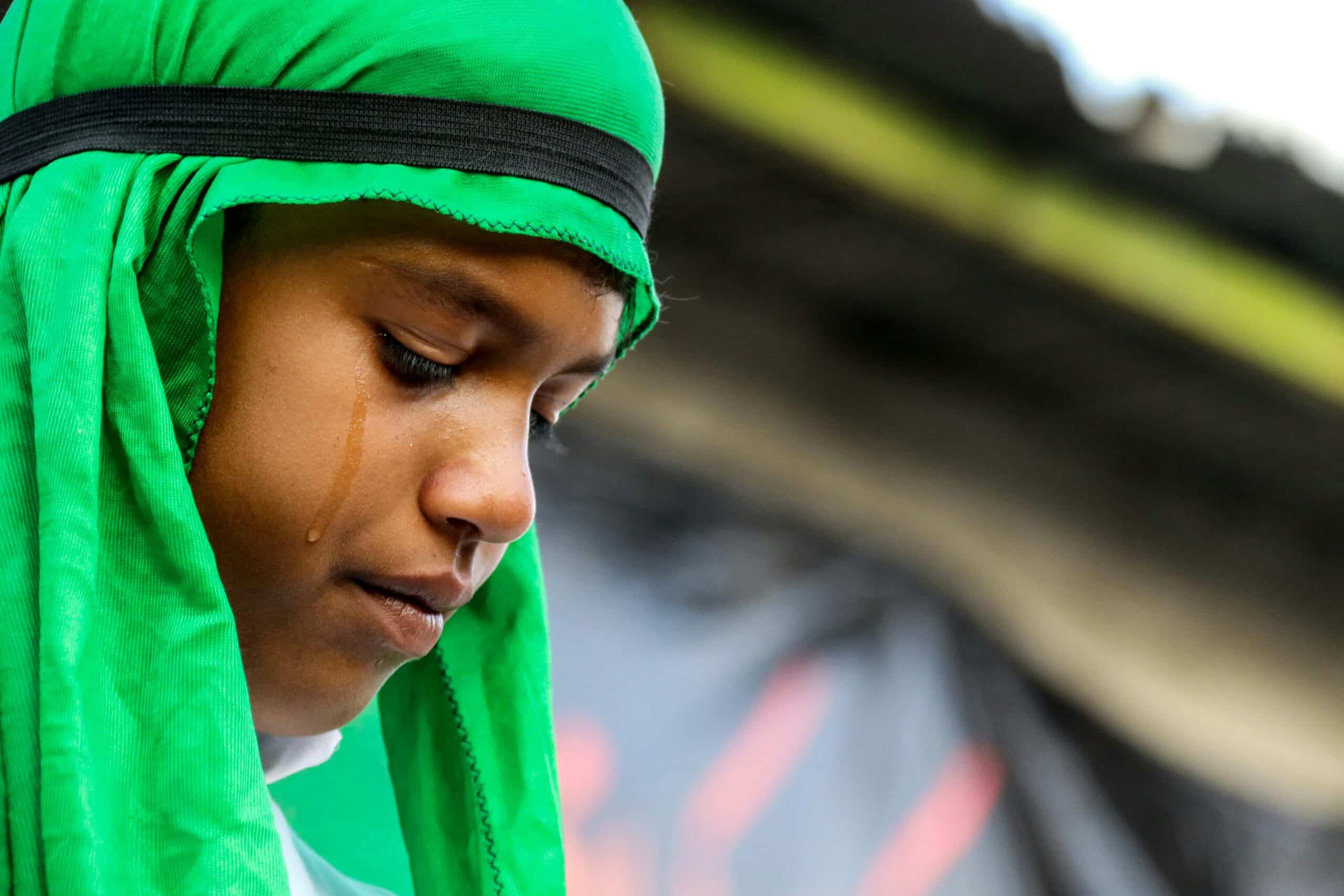
Muharram, the first month of the Islamic calendar, holds deep significance due to the tragic event of Karbala, where Imam Hussain (AS) and his companions stood against tyranny and sacrificed their lives for truth and justice. The message of Karbala transcends sectarian and religious boundaries, symbolizing a universal struggle for human dignity and moral courage. In an age marked by widespread injustice and ethical decay, remembering Karbala serves as a timeless inspiration for resistance, principled leadership, and the defence of truth.
The Battle of Karbala, which took place in 680 CE (61 AH), stands as a defining moment in Islamic—and indeed human—history. Its significance lies not merely in its historical facts, but in the enduring ethical and political questions it raises about power, legitimacy, resistance, and sacrifice. After the death of Prophet Muhammad (PBUH), leadership of the Muslim community transitioned through a series of caliphs. The Umayyad dynasty, under Muawiya ibn Abi Sufyan, consolidated power and departed from the ideals of the early Islamic leadership, transforming the caliphate into a hereditary monarchy. Upon Muawiya’s death, his son Yazid was appointed as his successor—a move widely opposed by many, including prominent companions of the Prophet. Imam Hussain ibn Ali (AS), the grandson of the Prophet, refused to pledge allegiance to Yazid, not out of personal ambition, but on ethical and theological grounds. Yazid’s rule, characterized by moral corruption, political oppression, and disregard for Islamic principles, was seen by Hussain as a betrayal of the Prophet’s teachings. Hussain’s refusal was, therefore, a principled stance against authoritarianism and moral decay. The situation escalated when Imam Hussain was invited by the people of Kufa (Iraq), who promised to support him against Yazid. On his journey toward Kufa, Hussain and his small group of family members and loyal companions were intercepted by Yazid’s forces and forced to stop at the desert plains of Karbala. Cut off from water and resources, they were surrounded by an army of thousands. On the 10th of Muharram (Ashura), after days of thirst and siege, Imam Hussain and his companions were brutally martyred. At its core, the conflict of Karbala was not a struggle for political power but a confrontation between truth and falsehood, principle and expediency, justice and tyranny. Imam Hussain’s choice to embrace martyrdom rather than submit to illegitimate authority has rendered Karbala a permanent symbol of moral resistance and ethical integrity. In this way, the event continues to inspire oppressed peoples across cultures and religions, representing the eternal stand of righteousness against injustice.
The tragedy of Karbala is not merely a historical event—it is a profound moral and spiritual legacy that embodies values deeply relevant to all of humanity. The stand taken by Imam Hussain (AS) and his companions was a conscious and deliberate assertion of principles over survival, dignity over submission, and truth over compromise. At the heart of Karbala lies the sacrifice for truth. Imam Hussain’s refusal to pledge allegiance to Yazid was not a political rebellion but a moral stance. He rejected a system that violated the foundational values of justice, equality, and righteousness in Islam. His willingness to face certain death rather than validate an unjust rule makes Karbala a defining example of integrity in action. Closely tied to this is the value of moral courage. Imam Hussain and his small group of followers, including elderly companions, women, and children, stood firm despite being vastly outnumbered and denied access to water in the scorching desert. Their perseverance in the face of brutal oppression illustrates a form of courage that is rooted not in force, but in unwavering conviction and faith.
Another profound lesson from Karbala is the concept of dignity in suffering. Despite the overwhelming adversity, Hussain and his companions upheld their values with grace and strength. Even when all worldly hope had vanished, their spiritual and ethical commitment remained intact. This dignified resistance has become a model for those who endure injustice without surrendering their humanity. Resistance against tyranny in Karbala was not rooted in violence or revenge. It was a principled defiance—an act of active resistance through moral stand, speech, and ultimately, martyrdom. Karbala redefines the nature of resistance, showing that even in apparent defeat, one can achieve a moral victory that echoes through history. Importantly, the values of Karbala are universal.
Though deeply embedded in Islamic tradition, their appeal transcends religious and cultural boundaries. The themes of standing up against oppression, sacrificing for truth, and preserving human dignity are globally resonant. From Gandhi’s nonviolent resistance to Mandela’s struggle against apartheid, echoes of Karbala can be seen in every movement that values conscience over convenience. In a world still rife with injustice and moral compromise, the values of Karbala remain a living guide—not just for Muslims, but for all those who seek a just and humane society.
We live in a world increasingly plagued by complex and deep-rooted injustices. While the actors and settings may differ from the 7th-century plains of Karbala, the underlying themes of oppression, tyranny, and the suppression of truth remain strikingly familiar. The message of Karbala resonates powerfully in the contemporary age, not as a distant historical memory, but as a mirror reflecting the struggles of the modern world. Across the globe, political oppression and authoritarian regimes have tightened their grip. From military juntas to pseudo-democratic rulers, dissent is often crushed under the guise of national security or religious purity. Voices that call for justice, accountability, and freedom are systematically silenced. The courage shown by Imam Hussain (AS) in standing against a corrupt ruler finds its modern parallel in countless journalists, activists, and ordinary citizens who risk their lives to speak truth to power. Ethnic cleansing, war, and displacement continue to devastate communities.
The ongoing humanitarian crises in Gaza, Syria, the plight of the Rohingya Muslims in Myanmar, and the oppression of Uyghurs in China represent a chilling repetition of Karbala’s core tragedy—the brutal targeting of innocent people for their identity, beliefs, or refusal to submit. Like the family of Hussain encircled and cut off in the desert, these communities are besieged, dehumanized, and denied even the most basic human rights. Simultaneously, economic exploitation and global inequality widen the divide between the powerful and the powerless. Millions are trapped in cycles of poverty and systemic injustice while wealth concentrates in the hands of a few. This economic tyranny often works hand-in-hand with political corruption, echoing Yazid’s empire, where power served the few and oppressed the many. Equally troubling is the suppression of free speech, truth, and dissent. In many societies, telling the truth has become a dangerous act. Whistleblowers are imprisoned, critics are exiled or assassinated, and media is manipulated or muzzled. In this climate, the moral clarity of Hussain’s stand—where he spoke openly against tyranny despite the deadly consequences—becomes a source of both guidance and courage. These global injustices are not abstract realities; they have faces, names, and human stories. The victims of modern oppression—refugees, political prisoners, silenced intellectuals, and oppressed minorities—mirror the suffering of Karbala. They are the modern-day analogues of Hussain’s family and companions, caught between conscience and coercion, dignity and destruction. Thus, remembering Karbala in today’s world is not merely a ritual act of mourning—it is an ethical imperative. It challenges us to recognize injustice in all its forms and to align ourselves with those who resist it, even at great personal cost.
The spirit of Karbala calls not for passive remembrance but for active solidarity with the oppressed of our time.
The author is a Professor at the University of Delhi.