


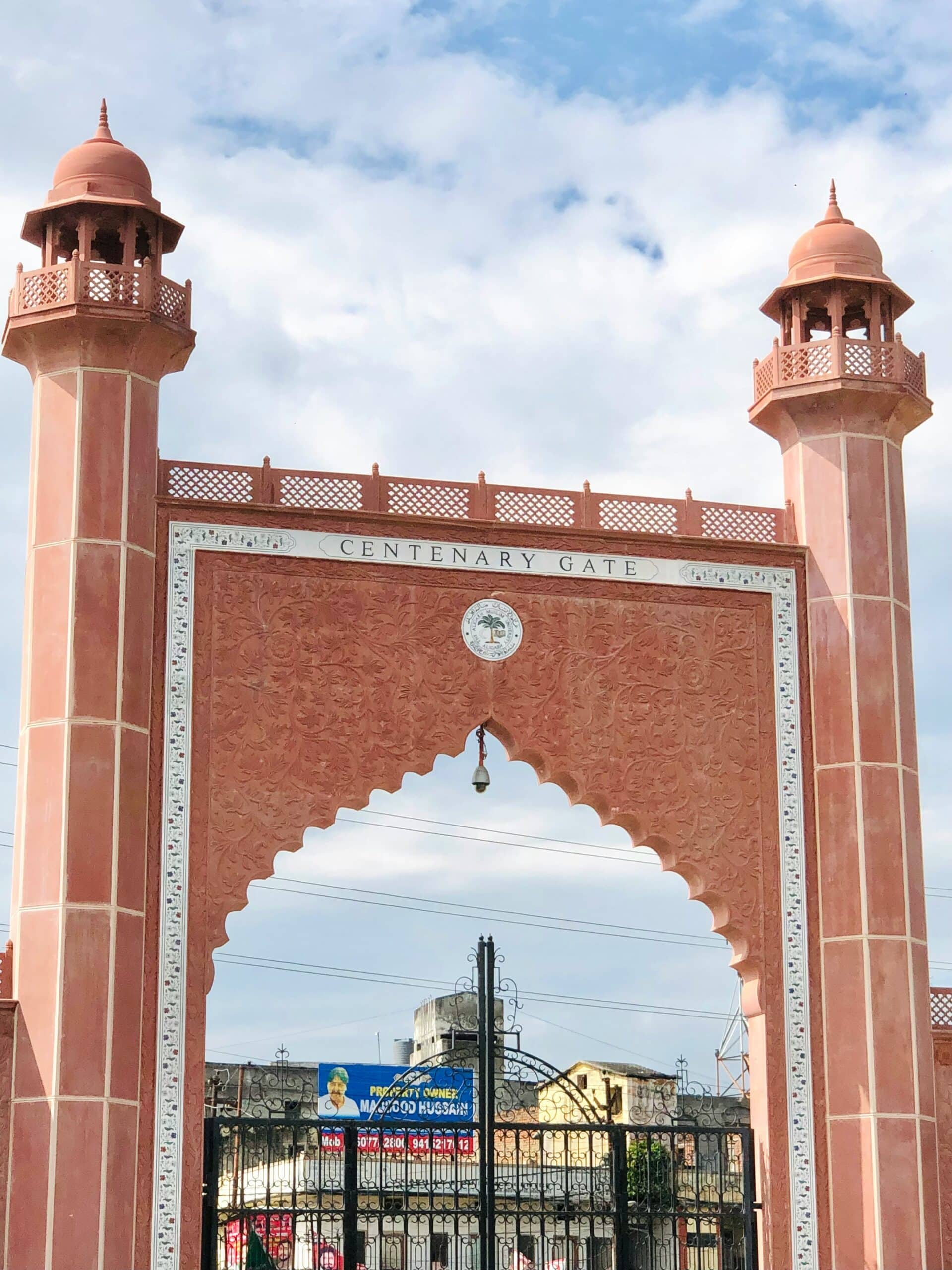
On the last working day of Chief Justice Dr. DY Chandrachud, a much-awaited verdict on the minority status of the Aligarh Muslim University was finally (un)delivered. The AMU minority character is no ordinary matter. Besides drawing 18 years of Supreme Court’s attention, it arguably has as much socio-political and historical dimensions as legal. The Bhartiya Janata Party (BJP) for instance, has consistently opposed the ‘minority’ status of AMU and made demands for providing reservation to to Scheduled Castes (SC), Scheduled Tribes (ST), and Other Backward Castes (OBC). Under Article 15(5) of the Constitution, minority educational institutions under Article 30(1) are exempted from reserving seats for SCs/STs or OBCs.
The fractious 4:3 ratio of the judgment mirrors the public opinion divide on the issue. The judgment has drawn much attention, with commentators rushing to either celebrate or decry the judgment. Hence, it is important to decode the judgment and its wider implications on law, society and polity. The 500 page judgment is split into two parts – with the 118 page majority ruling penned by Justice DY Chandrachud, for himself and Justices Sanjiv Khanna, JB Pardiwala and Manoj Misra. The rest, minority opinion, comprises three separate opinions penned by Justices Surya Kant, Dipankar Datta and SC Sharma running into 102, 88 and 193 pages, respectively.
The most important aspects of the binding majority ruling can be broken down into four parts. First, it overrules the 1967 SC judgment in S Azeez Basha – wherein it was held that since the AMU was a Central university, it could not be considered a minority institution under Article 30. Second, it laid down the parameters for what is required for an institution to be established by a minority to meet that constitutional test under Article 30. The test includes factors such as how the institution was established, its history, the community that was involved, and various other aspects. Third, the incorporation of an institution by way of a statute does not tantamount to its establishment, rather it is a procedural requirement does not dilute the minority character of an institution. Fourth, the disputed issue in the case – whether the AMU is a minority institution or not – will be determined by a separate bench of three judges based on the parameters laid down by the court.
It appears odd as to why does the judgment not go further and apply the neatly devised principles on to the facts of AMU. It instead directs that a fresh regular bench be constituted which would apply the indicia developed in this case to the facts of AMU in order to actually determine whether AMU has a minority status or not. Invariably, whenever a constitutional issue is adjudicated upon by a Constitution Bench, it also applies to the dispute at hand which brought along such constitutional issues at the doorstep of the court. In doing so, the court seems to have has segregated the questions of ‘law’ with questions of ‘facts’ – with the constitutional bench deciding on the former and leaving the latter to be decided later by the three judge bench. In the month of February this year, the court had concluded the hearings and reserved its judgment in the case. One could argue that the court could have perhaps conducted additional hearing in the matter to examine the facts and evidences to shed light on whether AMU qualifies to be covered under the parameters evolved.
On the contrary, the minority opinion, questions this anomaly. For instance, Justice Dipankar Datta, in his dissenting opinion, writes:
“50. … After almost 9 (nine) months the judgment came to be reserved, it pricks my conscience to send the matter back once again to an appropriate bench; more so, after both sides have exhaustively addressed us on the very issue as to whether AMU answers the characteristics of a minority institution. In present times, when there is a lot of emphasis on pendency of cases and expeditious disposal thereof, precious judicial time would be wasted if the same issue has to be agitated yet again when such time could be well utilised in answering other pressing questions of law.”
Further, interestingly enough, after making this observation, Justice Datta’s dissenting opinion does exactly what the majority ruling omits to do. It notes that the course of arguments in the ‘specific factual context of AMU’ was very extensive, and provided enough substance for the court to make a determination in AMU’s case. He then proceeds to interpret the submissions in the matter to eventually hold that AMU does not, indeed, have a minority status. This one instance alone is sufficient to delineate the stark disparities between the two opinions – majority and minority – in the approach and evaluating the contents of the submissions made before the bench by both the parties.
What raises another question of note is whether the minority opinion, to the extent it delves into the ‘specific factual context of AMU’, becomes relevant for the appropriate bench? While it is true that the majority ruling implicitly suggests that it is very likely that AMU as an institution, as it exists, is going to meet all those requirements which have been laid down by the court to be a minority institution; there remains space for the future Bench to draw from both the differing opinions. This is especially so because the minority opinions appear to be more explicit in answering (in the negative) on whether AMU covers the parameters devised by the majority, such as on AMU’s establishment.
The judgment has kept the curtains on the. The court has gone back to itself to decide the future.
This article was originally published in ThePrint on 09 November, 2024 and is republished here with due acknowledgment for broader academic dissemination. The authors are:
- Mohammad Nasir is Assistant Professor of Law at Aligarh Muslim University and author of Syed Mahmood: Colonial India’s Dissenting Judge (Bloomsbury 2022)
- Taha Bin Tasneem is Lead, Grievance Redressal and Strategic Intervention at Mission Accessibility, New Delhi.
- Aleema Nishat reads law at Aligarh Muslim University.